What Are Beauty Marks
Blog post description.
12/14/20254 min read
What are beauty marks?
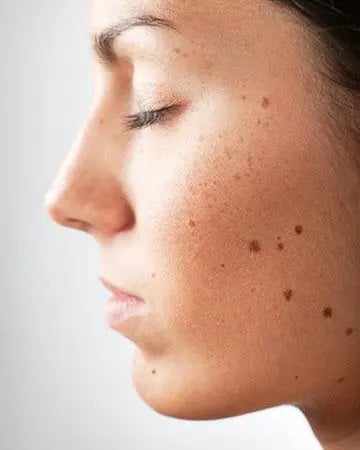
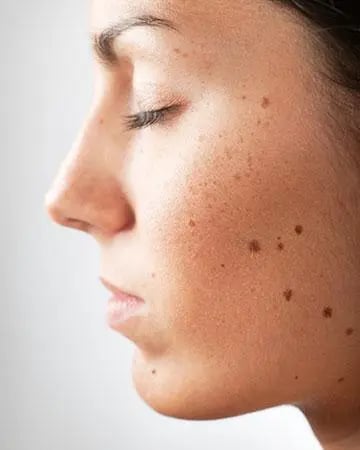
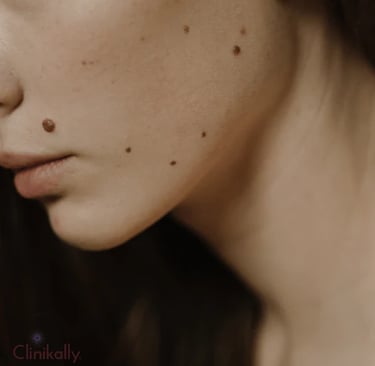
Beauty marks, sometimes known as beauty spots, are small, round, or oval dark spots on the skin that people often view as a unique feature rather than a flaw. Medically, many of these spots are moles formed from pigment cells called melanocytes that gather together, giving the spot its color.
Most beauty marks are usually less than a quarter inch (6 mm) wide. They tend to have smooth edges and are typically one even shade of brown or nearly black. They can be flat or slightly raised, and some may be present from childhood, while others can appear later in life.
How are beauty marks different from moles?
Doctors often use "mole" as the main term and "beauty mark" as a more casual word when the spot is in an attractive location. Many beauty marks are just moles that look good and do not have any concerning signs.
However, not every mole is a “beauty mark.” Some moles can be larger, uneven in color, or have irregular borders, and those may require more attention from a skin doctor.
Why do beauty marks appear?
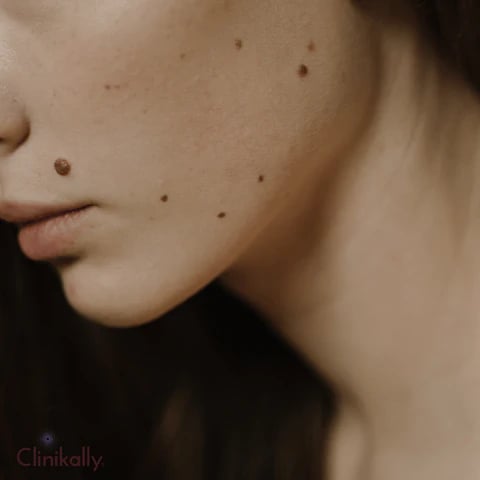
Beauty marks form when pigment cells in the skin cluster together instead of spreading out evenly. These cells produce melanin, which gives skin and hair their color. When they group together, you notice a darker spot.
Several factors can contribute:
Genetics: If your parents have many moles or beauty marks, you are more likely to have them too.
Sun exposure: Ultraviolet (UV) light from the sun can cause new moles to form or darken existing ones over time.
Hormones: Changes during puberty, pregnancy, or other hormone shifts can lead to the appearance of new spots or change the look of old ones.
Where do they usually show up?
Beauty marks can appear almost anywhere, but people often notice them most on the face, neck, shoulders, or upper chest. These areas are considered stylish or “photo-ready,” so spots there attract more attention and are more likely to be called beauty marks.
Some people are born with these spots, known as congenital nevi, while others develop them during childhood and young adulthood. It is less common, but adults can also get new moles or spots later in life.
Common traits of beauty marks:
- Small, usually under 6 mm across.
- Round or oval, with smooth, clear edges.
- One even color, often light to dark brown.
Are beauty marks safe?
Most beauty marks and regular moles are harmless and do not turn into cancer. Skin experts recommend monitoring them, as a mole or pigmented spot can sometimes develop into melanoma, a serious skin cancer.
Doctors often teach the ABCDE rule to help identify warning signs:
A – Asymmetry: One half looks different from the other.
B – Border: Edges are rough, blurred, or jagged.
C – Color: Many colors in one spot, or very dark and uneven.
D – Diameter: Larger than about 6 mm, or growing.
E – Evolving: Any change in size, shape, color, or texture.
If a “cute little dot” starts to itch, bleed, or change quickly, it is important to have it checked by a dermatologist.
When to see a skin doctor
You should talk to a professional if:
A beauty mark suddenly grows, darkens a lot, or looks very different from your other spots.
The spot hurts, itches, or bleeds without being scratched.
You have many moles and a family history of skin cancer.
Regular skin checks at home and with a dermatologist can help catch problems early. Treatment usually works best at this stage.
Quick safety tips
Use sunscreen and seek shade to protect your skin from UV damage.
Take a close look at your skin once a month to spot any new or changing marks.
Have any unusual or rapidly changing marks checked, even if they seemed like harmless beauty marks before.
Beauty Marks and Style
Throughout history, these spots have often been associated with beauty and charm. In some eras, people even created fake ones with makeup. Today, many still view a natural mark on the cheek or near the lips as something that adds uniqueness to their face.
Some individuals choose to keep their beauty marks as they are. Others may lighten or remove them for personal reasons. In many cases, the removal is a straightforward office procedure, but it should always be performed by a trained medical professional, not done at home.
Living with Beauty Marks
A beauty mark can be a part of what makes your face feel like "you," almost like a natural little signature. For many, embracing the mark and accepting it can boost confidence more than trying to conceal it.
At the same time, it’s important to treat every dark spot with respect. Enjoy how it looks, but keep an eye on it and protect it from too much sun. If something ever seems off, having it checked is not being dramatic; it’s just practicing good self-care.
BEAUTY MARKS


MOLES
image source - google
image source - pinterest
Why Do They Appear ?


image source - google
image source - pinterest
image source - google